The shift from summer to autumn is not a moment. It is a week, sometimes two, when the air changes before the calendar does. Mornings ask for sleeves. Afternoons still belong to the sun. The wardrobe has to hold both, and most pieces cannot. What follows are five that can — quiet, considered pieces that bridge the seasons without pretending the heat is over or the cold has arrived.
1. The longline cardigan
A longline cardigan is the piece you reach for when the day has not decided what it is. Worn open over a midi dress, it softens the silhouette for a cooler morning. Removed by noon. The length matters. A cardigan that hits mid-thigh reads as a layering piece, not as an afterthought, and the extra fabric gives weight without warmth.
Look for a knit with some density. Open-front styles in a fine rib hold their shape through repeated wear, and a neutral tone — cream, oat, camel — pairs with everything beneath it. Avoid buttons. The open front is what makes it transitional. You wear it. You take it off. No fastening, no adjusting, no interruption to the outfit underneath.
2. The turtleneck bodysuit
A turtleneck bodysuit is the most efficient layering piece in a transitional wardrobe. It sits flat under everything. The turtleneck adds coverage without a scarf, and the bodysuit construction means no bunching at the waist when you layer a blazer or cardigan over it. One piece, one smooth line, and the outfit beneath stays clean.
The fabric should be a fine knit, not a thick sweater knit. You are building a base, not wearing a standalone sweater. A fine-gauge turtleneck bodysuit in black or cream disappears under structured layers and reads as polished on its own with wide-leg trousers for an evening that starts early.
3. The tiered maxi dress
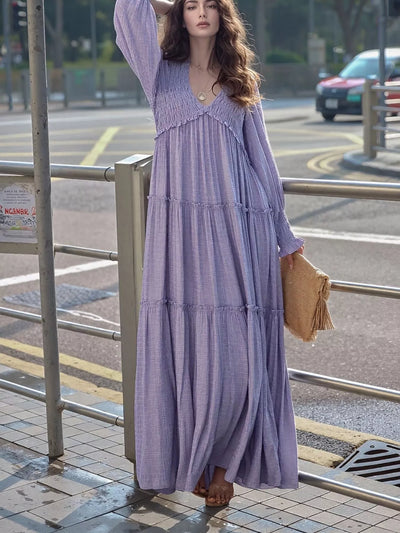
A tiered maxi dress does something most summer dresses cannot. It absorbs the transition. The tiers add visual weight that reads as autumn even in a lightweight fabric, and the maxi length covers enough skin to feel right when the temperature drops. On a warm afternoon, it stands alone. On a cool morning, a cardigan over the shoulders and the dress carries both.
Choose a fabric with movement. A viscose or rayon blend drapes differently than stiff cotton, and the tiers should fall from the body, not stand out. A midi or maxi dress in a solid tone gives you the most layering options, but a subtle print works if the rest of the wardrobe is quiet.
4. The velvet wrap
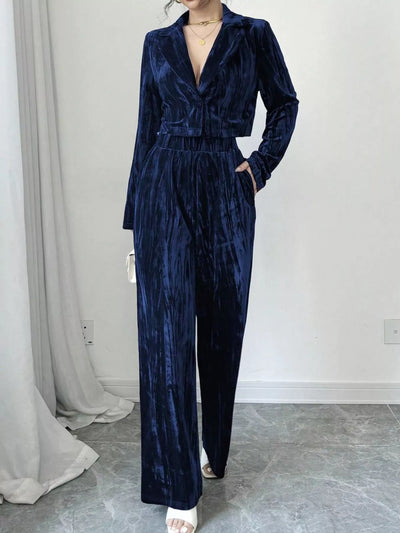
Velvet is the fabric that signals the season has turned. A velvet wrap dress or a velvet blazer brings the texture of autumn into the wardrobe without the weight of winter. The pile catches light in a way that no other fabric does, and the wrap silhouette on a dress means the fit adapts — looser for a warm afternoon, cinched for a cool evening.
A velvet blazer over a two-piece set or a simple knit dress is the fastest way to transition an outfit from day to evening in autumn. The texture does the work that accessories usually do. You need nothing else.
5. The tailored blazer set
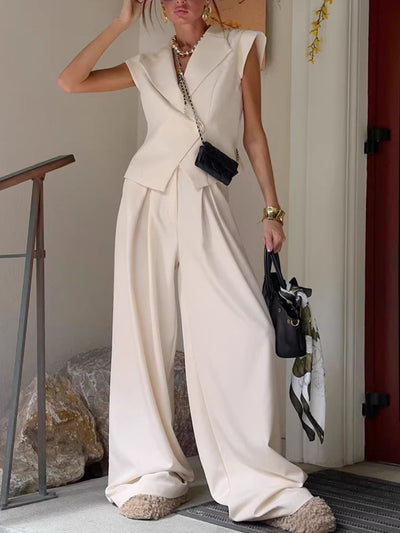
A blazer and trouser set is the one piece that works in every configuration. Together, it reads as a suit. The blazer alone over a bodysuit and jeans. The trousers alone with a sweater. Three outfits from two pieces, each one suited to a different temperature and a different occasion.
The cut should be single-button. An open front breathes when the afternoon warms, and a closed front holds structure when the evening cools. Look for a fabric with some body — a structured woven, not a soft jersey — so the blazer keeps its line whether worn together or apart.
The principle
Transitional dressing is not about buying a new wardrobe. It is about identifying the pieces that work in two seasons instead of one. A longline cardigan that layers over a summer dress and under a winter coat. A bodysuit that stands alone in October and layers in November. A tiered maxi that reads as summer in the afternoon and autumn by evening.
Five pieces. Each one earns its place by working in more than one temperature, more than one configuration, more than one part of the day. That is the measure of a transitional wardrobe. Not how much you own, but how much each piece does.