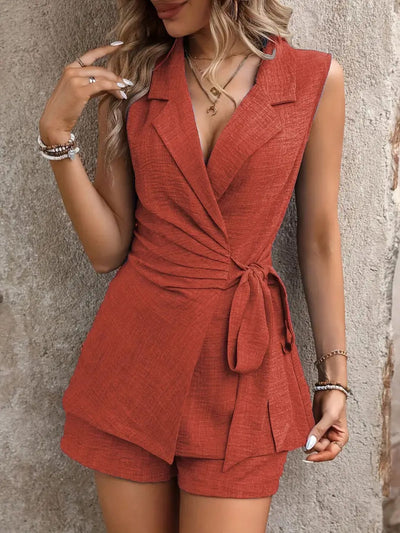
Layering is the most misunderstood gesture in dressing. It is not piling on clothes for warmth. It is building depth, one texture at a time, until the sum reads as more than the parts. A well-layered outfit tells a story about materials and how they respond to each other. Velvet against ribbed knit. Structured blazer over fluid dress. The contrast does the work that color and print cannot.
The three principles are texture, tone, and time. Texture is what you feel at a glance. Tone is how colors speak to each other across layers. Time is how the outfit evolves from morning to evening, from warm room to cold street, without losing its shape or its intention.
Texture: the first layer sets the vocabulary
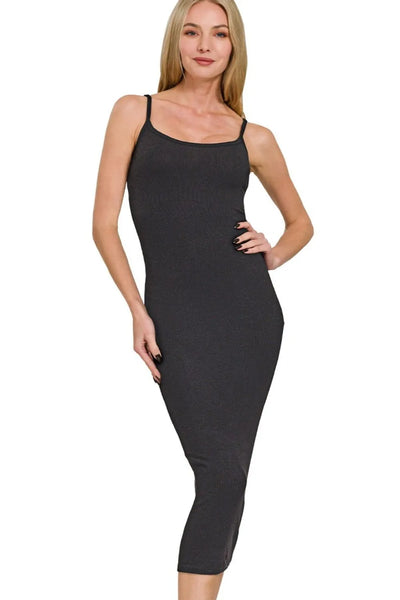
Begin with a base that has its own surface interest. A ribbed bodycon midi dress in a fine knit gives you a texture that reads as intentional, not as underwear disguised as clothing. The ribbing creates vertical lines that elongate, and the density of the knit means it holds its shape under whatever you place above it.
This is the layer closest to the skin, so it must feel as good as it looks. If the foundation is uncomfortable, the entire outfit becomes something you manage rather than something you wear.
Structure: the second layer adds intent
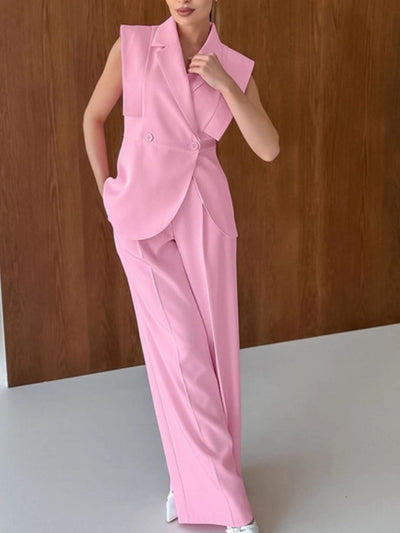
The second layer is where the outfit gains direction. A sleeveless blazer over a ribbed base creates an architectural contrast. The hard lines of the blazer against the soft horizontal ribbing of the dress. One is fluid, the other is fixed. Together, they read as deliberate.
A sleeveless blazer is the transitional layering piece that most wardrobes lack. It gives the structure of a jacket without the warmth, which means it works indoors and out. The armholes stay clean over a fitted sleeve, and the open front means the base layer remains visible, which is the entire point of layering rather than covering.
Tone: how layers speak to each other
Texture gives the outfit its feel. Tone gives it its mood. The most common mistake in layering is treating each piece as a separate color decision. Instead, think in families. A cream base, a camel mid-layer, a wine accent. Three tones, one temperature.
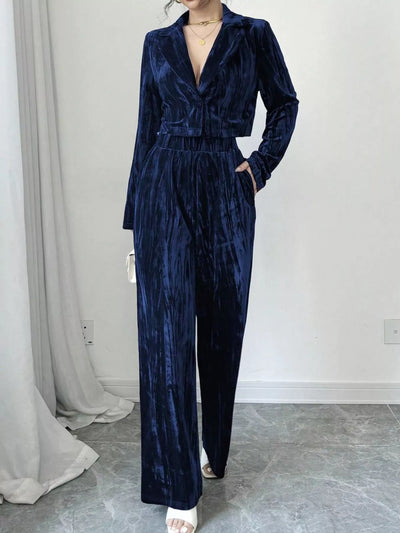
When you introduce velvet into the layers, you add both texture and tone. A velvet blazer with a wide-leg trouser catches light differently than any other fabric. It holds shadow. It reads as evening even at noon. The pile of the velvet against the smooth knit beneath it creates a contrast that needs no print, no embellishment, no statement jewelry.
The unexpected layer: warmth as detail
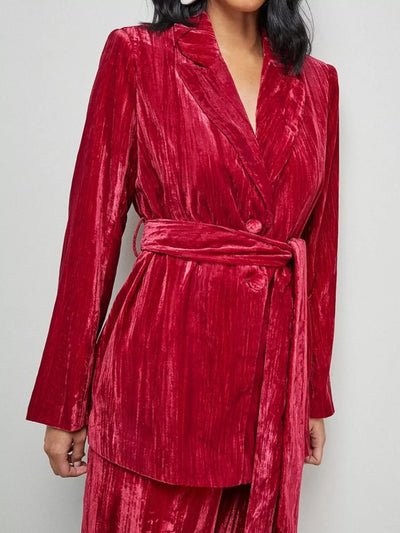
The best layered outfits include one piece that surprises. A velvet lapel blazer with belted pants brings the richness of velvet to a tailored silhouette. The lapel is where the velvet lives, which means the texture frames the face rather than covering the body. It is a detail that reads differently from three feet away than it does from across a room, and that shift in scale is what makes a layered outfit worth examining.
Belted pants give you a defined waist, which matters when the upper layer is structured. Without it, the blazer and the base can blur into one shapeless mass. The belt creates a break, and the break creates proportion.
Time: the outfit that changes with the hour
A layered outfit should not be static. It should respond to the day. A blazer and shorts set with a tie waist works at noon with the blazer open and the base layer visible. By evening, the blazer closes, the tie cinches, and the same pieces read as something more formal. The outfit does not change. Only the way it is worn does.
This is the principle that separates dressing from costume. A costume is fixed. A layered outfit is alive. It adapts to the temperature of the room, the hour of the day, the mood of the wearer. The pieces do not change. Their relationship does.
The sum of the layers
Texture, tone, and time. The ribbed base gives surface. The blazer gives structure. The velvet gives depth. The belt gives proportion. And the adaptability of each piece gives the outfit a life beyond the moment it was assembled. Layering at its best is not about adding more. It is about each addition changing the meaning of what came before it.
The woman who layers well is not the one wearing the most pieces. She is the one whose every piece has a reason to be there, and whose reason is visible from across the room.